Computer vision helps manufacturers by automating quality inspection, spotting equipment wear before it fails, counting and tracking stock, enforcing PPE and safety zones, and guiding robots. Each use case replaces a slow, inconsistent manual check with a camera and a model. BytezTech delivers these as computer vision systems on NVIDIA hardware, from pilot to production.
Key takeaways
- Quality inspection is the first use case for most plants because the cost of a missed defect is easy to measure.
- The same cameras and edge box can serve safety monitoring and inventory tracking.
- Modern models adapt to lighting and orientation changes that break rule based machine vision.
- Integration with PLCs, MES and ERP is what turns a detection into a saving.
- Pilot one line first; payback is measured in months when the use case is chosen well.
Rising labor costs, supply chain disruptions, and increasing quality demands put pressure on every operation. Computer vision technology is emerging as one of the most powerful tools to address these issues. By enabling machines to “see” and interpret visual data in real time, it automates repetitive tasks, reduces human error, and delivers actionable insights that directly impact the bottom line.
At BytezTech, as a proud NVIDIA Inception Partner, we help manufacturers harness advanced computer vision powered by NVIDIA’s cutting-edge GPUs and AI frameworks. This blog explores practical ways computer vision streamlines operations and drives significant cost cutting across manufacturing facilities.
What is Computer Vision in Manufacturing?
Computer vision is a branch of artificial intelligence that allows computers to extract meaningful information from digital images and videos. In manufacturing, it uses high-resolution industrial cameras, edge computing, and deep learning models to inspect products, monitor processes, guide robots, and ensure safety all at speeds and accuracy levels impossible for humans alone.
Unlike traditional rule-based machine vision systems, modern AI-powered computer vision adapts to variations in lighting, product orientation, and defect types. It continuously improves through training on real factory data. In 2026, with faster edge AI processing and better models, these systems integrate seamlessly into smart factories, delivering immediate ROI through higher throughput and lower waste.
Why Computer Vision Matters for Manufacturing in 2026
Industry studies show that AI vision systems can reduce product defects by up to 50% while increasing manufacturing yield by 10-20%. Many facilities report productivity gains of up to 52% in manufacturing after implementing computer vision.
As an NVIDIA Inception Partner, BytezTech leverages accelerated computing to deploy these solutions efficiently, even on complex production lines handling thousands of units per hour.
Automated Quality Control and Defect Detection
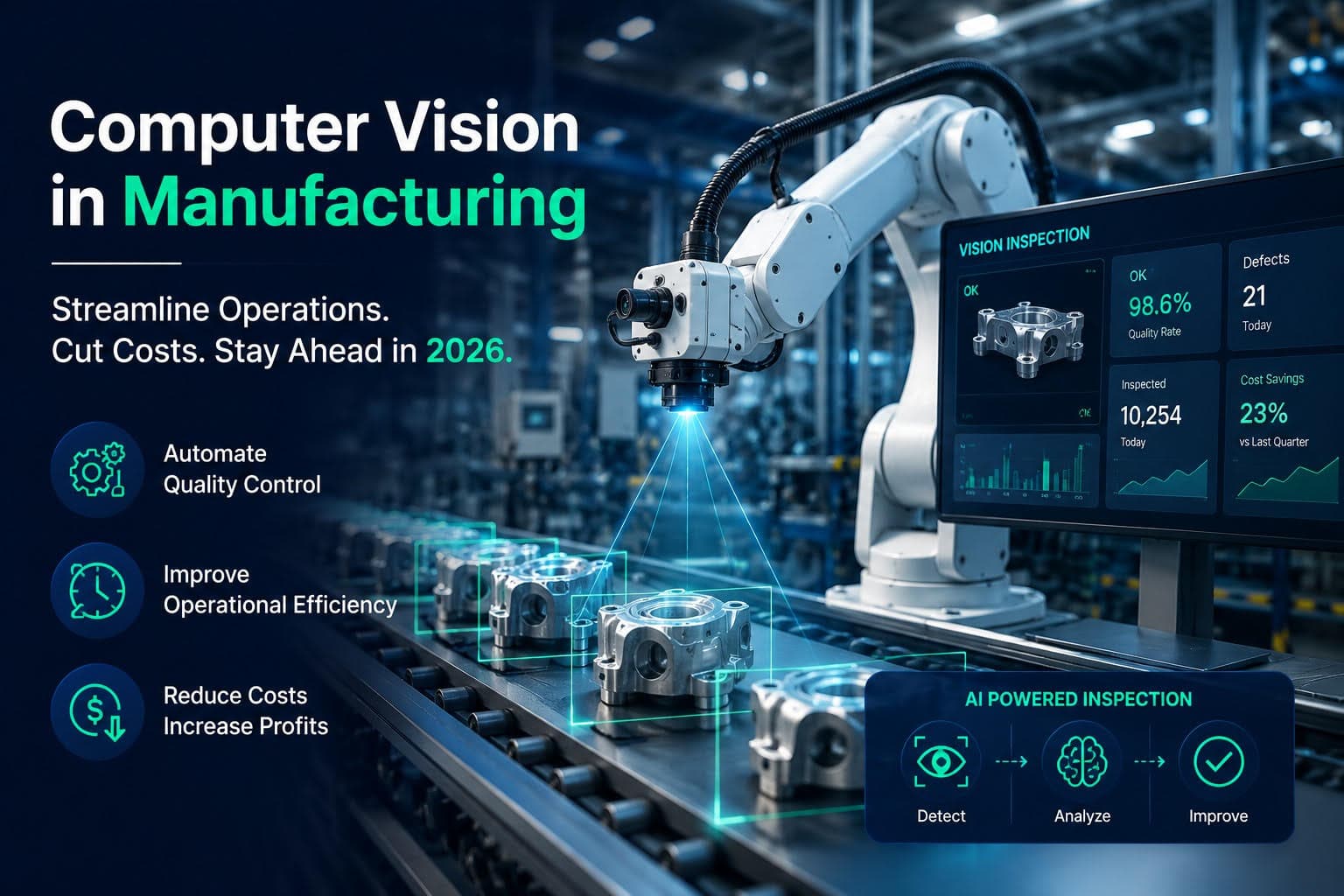
Quality control with computer vision stands out as the top application in manufacturing today.
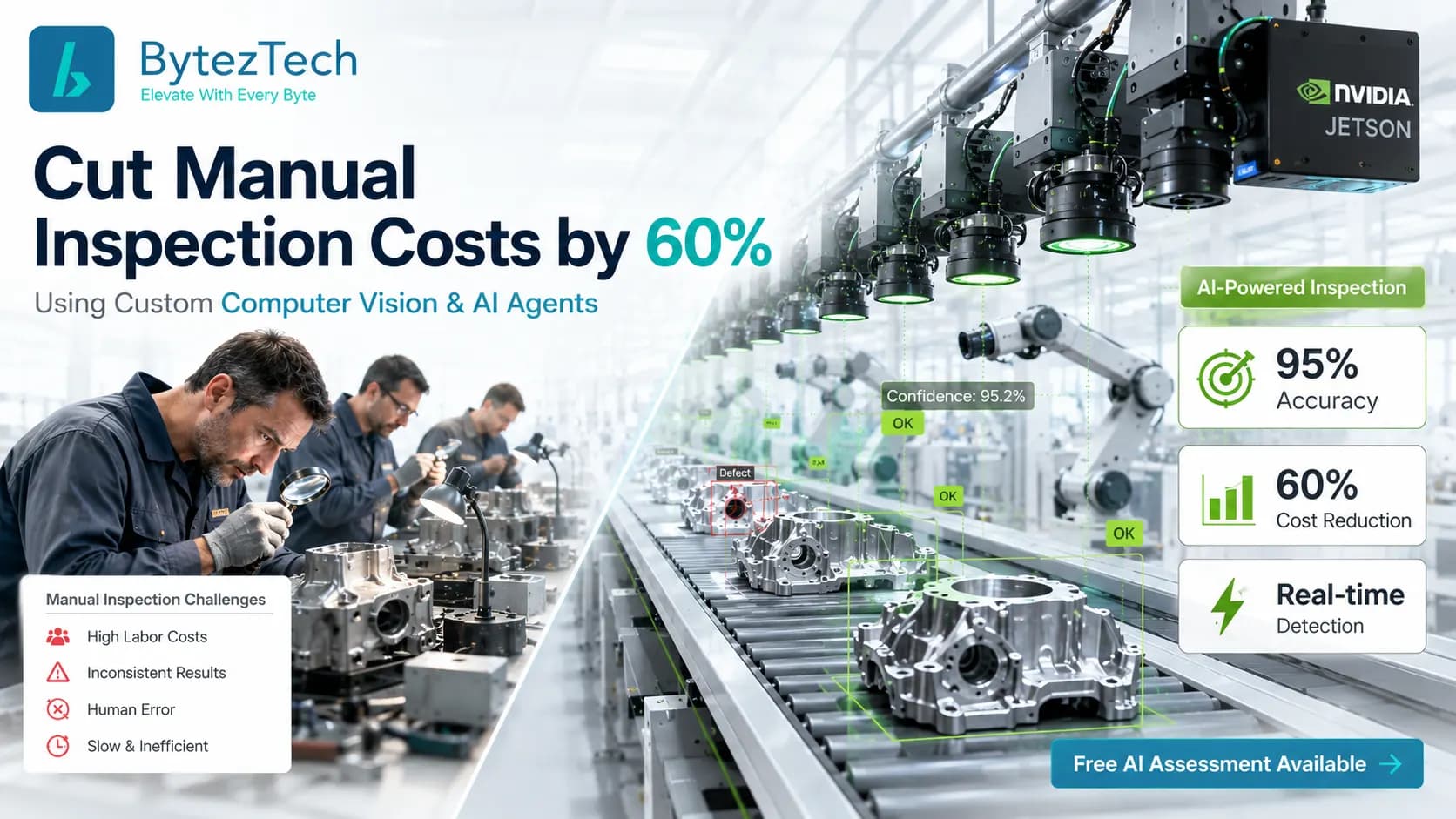
Traditional manual inspection is slow, inconsistent, and prone to fatigue. Human inspectors typically catch only 80-90% of defects, especially microscopic ones like cracks, scratches, dents, or missing components. Computer vision systems achieve over 99% accuracy, inspecting products in real time on fast-moving conveyor belts.
These systems detect surface anomalies, dimensional errors, assembly mistakes, and even subtle color inconsistencies that escape the naked eye. Early detection prevents defective items from proceeding further in the production process, dramatically reducing rework and scrap costs.
Benefits include:
- Reduced scrap and waste
- Lower rework expenses
- Consistent product quality leading to fewer customer returns and recalls
- Faster inspection cycles that boost overall line speed
In electronics, automotive, and textile manufacturing, such systems have cut quality-related costs significantly while improving first-pass yield.
Predictive Maintenance Using Visual Monitoring
Unplanned downtime is one of the biggest cost drivers in manufacturing. Computer vision enhances predictive maintenance by continuously monitoring equipment for signs of wear, misalignment, vibration patterns, or thermal hotspots.
Cameras combined with AI can spot early indicators of failure such as unusual wear on conveyor belts, leaks, or abnormal machine movements days or weeks before a breakdown occurs. This allows maintenance teams to schedule repairs during planned downtime, avoiding expensive emergency fixes and production halts.
Manufacturers using vision-based predictive systems report substantial reductions in unplanned downtime and maintenance costs. The technology works alongside sensors and IIoT for a complete health picture of critical assets.
Streamlining Inventory Management and Logistics
Computer vision transforms warehouse and logistics operations inside factories.
It enables automated inventory counting, real-time stock level monitoring, and accurate tracking of materials as they move through the facility. Vision systems can read labels, verify part numbers, and detect misplaced items without manual scanning.
In logistics areas, computer vision guides autonomous mobile robots (AMRs), optimizes picking routes, and prevents bottlenecks by monitoring material flow. This reduces excess inventory holding costs and minimizes stockouts that halt production.
The result is leaner operations with faster material throughput and lower labor dependency in warehousing tasks.
Enhancing Worker Safety and Compliance
Safety is both a moral and financial priority. Computer vision improves workplace safety by monitoring for hazards in real time:
- Detecting workers without proper PPE (helmets, vests, gloves)
- Identifying “man-down” situations or entry into dangerous zones near heavy machinery
- Monitoring ergonomic risks or signs of fatigue
- Triggering automatic alerts or machine stops to prevent accidents
These capabilities reduce workplace incidents, lower insurance premiums, and help maintain regulatory compliance. Safer environments also improve employee morale and reduce absenteeism-related productivity losses.
Robotic Guidance and Process Automation
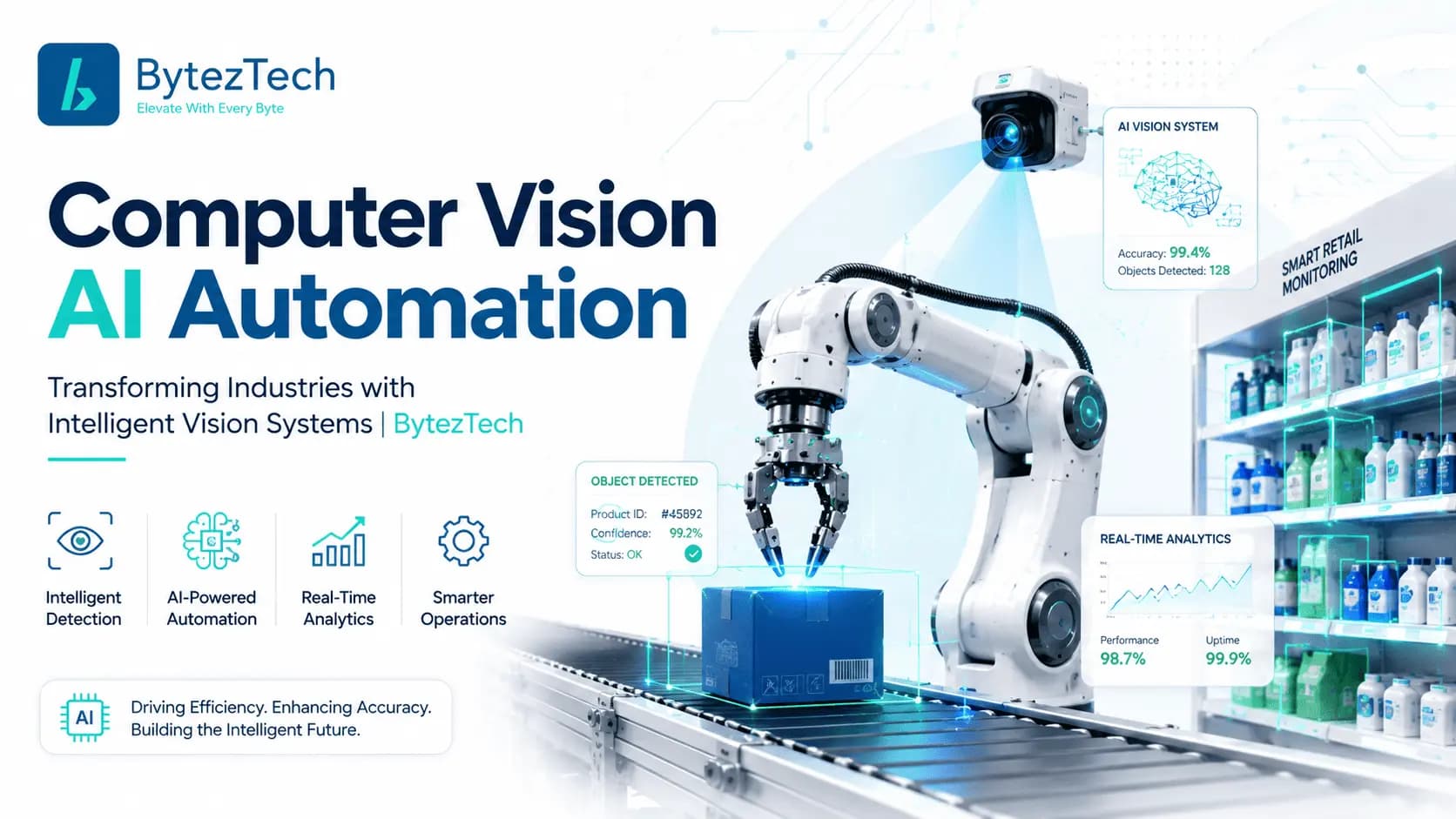
Computer vision powers smarter robotics on the factory floor. Vision-guided robots perform precise picking, placement, assembly, and packaging tasks even when parts are randomly oriented.
This flexibility reduces the need for expensive fixed tooling and allows lines to handle product variations more easily. In high-mix, low-volume manufacturing, it delivers major efficiency gains.
Combined with collaborative robots (cobots), it creates safer human-robot workspaces where vision ensures accurate and safe interactions.
How BytezTech Implements Computer Vision
As an NVIDIA Inception Partner, BytezTech brings deep expertise in deploying scalable computer vision solutions tailored to manufacturing needs.
We combine NVIDIA’s powerful GPUs for training and inference with industrial cameras, edge devices, and custom AI models. Our approach includes:
- We start with a detailed analysis of your production lines and identify high-impact use cases.
- Training models on your specific products and defect types for maximum accuracy.
- Seamless connection with existing PLCs, MES, ERP systems, and robotics.
- Edge or cloud-hybrid setups with ongoing monitoring and model retraining.
Many clients see payback periods of just a few months through reduced waste, lower labor costs in inspection, and minimized downtime.
Real-World Cost Savings and ROI
Implementing computer vision typically delivers measurable results:
- Quality inspection costs drop by 50-90% through automation
- Scrap and rework reduction of 30-75% in many cases
- Productivity increases of 20-52%
- Significant savings in labor for repetitive visual tasks
- Lower energy and material waste through optimized processes
One steel manufacturer improved defect detection accuracy from 60-70% to over 98%, saving millions annually in labor and waste. Similar gains appear across automotive, electronics, pharmaceuticals, and consumer goods sectors.
Overcoming Implementation Challenges
While the benefits are clear, successful adoption requires careful planning. Common challenges include integration with legacy equipment, data quality for model training, and change management for workers.
BytezTech addresses these by starting small with pilot projects, ensuring strong data pipelines, and providing comprehensive training. Our NVIDIA-backed infrastructure ensures high-performance processing even in demanding industrial environments.
The Future of Computer Vision in Manufacturing
By 2026 and beyond, computer vision will become even more central to smart factories. Advances in multimodal AI, 3D vision, and real-time closed-loop systems will enable fully autonomous quality control and adaptive production lines.
Manufacturers who adopt these technologies early will gain competitive advantages through superior quality, faster time-to-market, and lower operating costs.
Ready to Transform Your Manufacturing Operations?
Computer vision technology offers a proven path to streamline operations and achieve meaningful cost cutting while improving quality and safety. Whether you need automated defect detection, predictive maintenance, or intelligent robotics guidance, the right solution can deliver rapid returns.
At BytezTech, as a trusted NVIDIA Inception Partner, we specialize in delivering practical, high-ROI computer vision solutions for the manufacturing industry. Our team works closely with clients to design systems that fit their unique processes and scale as they grow.
If you’re looking to modernize your facility and reduce operational costs, contact us today for a free consultation. Let’s explore how our computer vision can drive efficiency and profitability for your manufacturing business in 2026 and beyond.
Contact us today to discuss more.

Written by
Chintan PoriyaFounder & CEO, BytezTech
Chintan brings over 11 years of proven experience in technology leadership, AI product development and digital transformation. As the founder of BytezTech, he has built the company from a three-person team into a dedicated AI solutions company delivering GPU-accelerated computer vision, intelligent automation and AI agent systems to clients across 8 countries.